

Category II AIFs in India 2026: Where Smart Money Is Moving

Introduction: Why Investors Can’t Afford to Miss This Wave
Category II AIFs in India 2026 are where the country’s wealthiest families, HNIs, and institutions are moving their capital. With over ₹3.6 lakh crore already raised by AIFs, Category II is leading the charge — focusing on growth equity, secondaries, and pre-IPO opportunities.
The message is clear: allocations are filling fast. Miss these funds now, and you’ll be watching others capture 20–30% IRRs while you settle for single-digit returns.
Quick Snapshot: Category II AIF Fund Terms in 2026
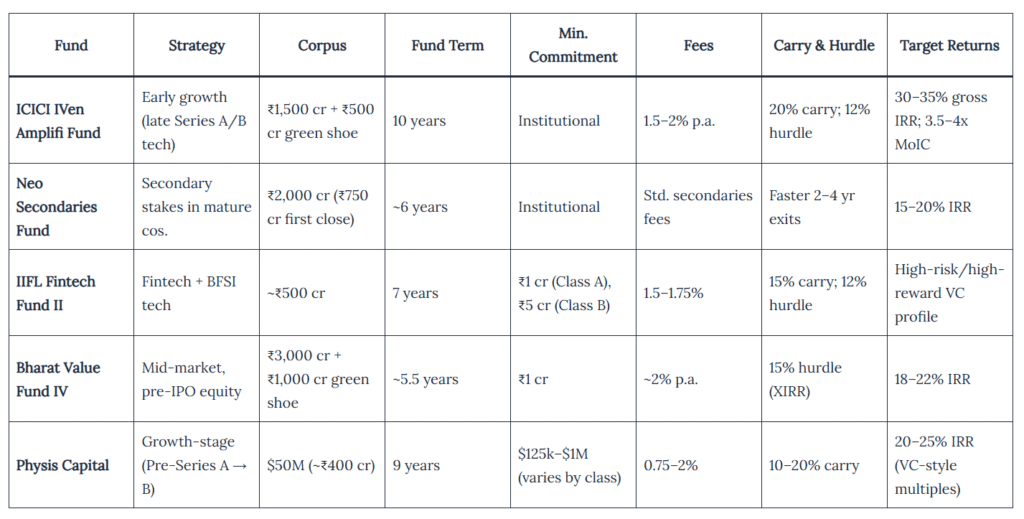
Deep Dive: The Hottest Category II AIFs in India
ICICI Venture – IVen Amplifi Fund
- Size: ₹1,500 crore (+₹500 crore green shoe)
- Fund Term: 10 years; 5-year investment period
- Fees: 1.5–2% p.a. | Hurdle: 12% IRR | Carry: 20% (full catch-up)
- Returns: Targeting 30–35% gross IRR; 3.5–4x MoIC
- FOMO angle: Backed by ICICI’s brand and network, this fund is oversubscribed fast. If you want exposure to late-stage Indian tech leaders before IPO, you can’t wait.
Neo Secondaries Fund
- Size: ₹2,000 crore (₹750 crore first close already done)
- Fund Term: ~6 years
- Focus: Acquiring secondary stakes in profitable, mature private companies
- Returns: 15–20% IRR, with quicker liquidity (2–4 year exits)
- FOMO angle: Access to late-stage unicorns before IPOs at attractive valuations. These deals rarely come back once the fund closes.
IIFL Fintech Fund II
- Size: ~₹500 crore
- Fund Term: 7 years
- Commitment: ₹1 crore (Class A) | ₹5 crore (Class B)
- Fees: 1.5–1.75% | Carry: 15% | Hurdle: 12% IRR
- Track record (Fund I): 80% IRR on first exit, 26× revenue growth, 0 write-offs
- FOMO angle: India’s fintech industry is projected to hit $1.5 trillion. Miss this, and you could miss the next Paytm, Zerodha, or Razorpay.
Bharat Value Fund IV
- Size: ₹3,000 crore (+₹1,000 crore green shoe)
- Fund Term: ~5.5 years (shorter than most PE funds)
- Focus: Pre-IPO mid-market companies (₹300–1,000 crore revenues)
- Returns: 18–22% IRR | Hurdle ~15%
- FOMO angle: Quicker IPO/M&A exits (30–36 months) mean faster liquidity. This is the sweet spot for investors who don’t want to wait a full decade.
Physis Capital – India Growth Opportunity Fund
- Size: $50M (~₹400 crore) | ~₹150–200 crore already raised
- Fund Term: 9 years (till 2032)
- Fees & Carry: 0.75–2% fees | 10–20% carry depending on class
- Portfolio Plan: 15–20 concentrated startup bets
- Returns: Aims for 20–25% IRR via high-growth startups
- FOMO angle: India is expected to mint 100+ unicorns. Physis aims to catch them early. Delay, and the unicorns are gone.
Expected Returns: The 20–30% IRR Club
Traditional FDs (6–7%) and even equity mutual funds (12–15%) pale in comparison to the 20–30% gross IRRs these AIFs are targeting.
But here’s the truth:
- Gross vs Net: After 1.5–2% management fees and 20% carry, net returns will be lower — often in the high-teens to low-20s IRR range.
- Dispersion: Top funds deliver 25%+, while others may underperform.
Still, this is the asset class where India’s wealthy are doubling allocations — and they’re not waiting around.
Why Category II AIFs Are Winning Investor Capital
- Pre-IPO & Secondaries: Shorter liquidity cycles (2–4 years for some deals).
- Aligned incentives: GP commitment + performance-based carry.
- Diversification: From fintech and tech to mid-market industrials.
- Credibility: SEBI-regulated, institutional governance.
Conclusion: Don’t Be Left Out
Category II AIFs in India 2026 are no longer niche — they’re the go-to allocation for smart money.
- ICICI IVen = late-stage tech scale-ups
- Neo = secondaries & quicker exits
- IIFL = fintech unicorn hunters
- Bharat Value Fund = pre-IPO gems
- Physis = growth-stage VC bets
Each of these funds is closing fast. Delay, and you’ll be locked out or paying higher valuations later.
The question is: Will you ride India’s next wealth wave through Category II AIFs, or watch from the sidelines?
FAQs on Category II AIFs in India (2026)
1. What is a Category II AIF in India?
A SEBI-regulated Alternative Investment Fund that invests in private equity, growth capital, secondaries, and pre-IPO opportunities without heavy leverage.
2. What returns can investors expect in 2026?
Most funds target 18–30% IRR gross. Net returns after fees typically land in the high-teens to low-20s IRR range.
3. What is the minimum investment?
SEBI mandates ₹1 crore as the minimum ticket size. Some funds have higher thresholds depending on the share class.
4. Why are HNIs & family offices moving into AIFs?
For higher returns, diversification, pre-IPO access, and faster exits compared to listed equities or real estate.
5. Which sectors are hot in 2026?
Fintech, generative AI, consumer tech, SaaS, healthcare, deep-tech, and mid-market industrials.
