Why Category III AIFs Often Don’t Work for NRIs — And What Works Better Instead

A practical, NRI-focused guide to understanding structural risk, taxation, repatriation, and better-aligned alternatives
Category III AIFs often fail NRIs not because of poor market performance, but because of structural misalignment. Onshore Category III AIFs are designed for resident investors operating in INR, under domestic tax and regulatory frameworks. NRIs, on the other hand, face additional layers of FEMA rules, repatriation constraints, tax friction across jurisdictions, currency mismatch, liquidity risk, and operational complexity. For most NRIs, these factors materially reduce net returns and increase risk. GIFT City–domiciled funds offer a structurally superior alternative for NRIs seeking sophisticated strategies, as they are designed for foreign-currency investing, full repatriation, and global compliance alignment.
Introduction: Why This Conversation Matters for NRIs
Over the past few years, Category III Alternative Investment Funds (AIFs) have gained popularity in India due to their promise of absolute returns, hedge-fund-like strategies, and the ability to profit in rising or falling markets.
Many NRIs, especially high-income professionals and entrepreneurs, are increasingly being pitched these products.
However, investment suitability for NRIs is fundamentally different from that of resident investors.
Returns alone are not enough.
Structure matters.
This article explains why Category III AIFs often don’t work for NRIs, even when they perform well on paper — and what structures tend to work better instead.
What Are Category III AIFs? (Quick Context)
According to SEBI, Category III AIFs are funds that:
- Employ complex or diverse trading strategies
- May use leverage and derivatives
- Invest in listed and unlisted securities
- Aim for short- to medium-term absolute returns
Common strategies include:
- Long–short equity
- Arbitrage
- Event-driven strategies
- Quantitative / algorithmic trading
- High-risk credit strategies
These are not long-only, buy-and-hold vehicles — and that distinction is critical.
The Core Problem: Category III AIFs Are Built for Residents, Not NRIs
Why are Category III AIFs risky for NRIs?
Because they are structured for resident investors and create additional regulatory, tax, repatriation, currency, and liquidity risks for NRIs that do not exist for domestic investors.
Let’s break this down.
1. Repatriation Risk: The Single Biggest NRI Issue
For NRIs, the most important investment question is:
Can I get my money out of India smoothly, predictably, and legally?
Onshore Category III AIFs operate under FEMA and RBI frameworks, which were not designed with NRIs as the primary investor base.
Common challenges:
- Repatriation terms differ from fund to fund
- Some investments are non-repatriable
- Exit proceeds may require additional approvals or documentation
- Regulatory interpretations can change mid-investment
This introduces structural uncertainty, which cannot be diversified away.
2. Tax Friction and Post-Tax Underperformance
Unlike Category I and II AIFs, Category III AIFs are generally taxed at the fund level.
Why this hurts NRIs:
- Indian taxes may be paid before distributions
- Income must still be declared in the country of residence
- Foreign tax credits may not fully offset Indian taxes
- Classification of income (business income vs capital gains) adds complexity
- Cash-flow mismatches are common
Result:
👉 Lower effective post-tax returns, despite attractive gross performance.
3. Leverage and Tail Risk: Not Just Volatility, but Structure
Leverage is a defining feature of Category III AIFs.
While leverage can boost returns:
- It amplifies drawdowns
- It increases the likelihood of sharp NAV shocks
- It triggers redemption gates during stress
For NRIs, who typically:
- Monitor investments remotely
- Have limited ability to intervene
- Value capital predictability
…this tail risk is structurally unsuitable.
4. Liquidity Mismatch with NRI Life Realities
Most Category III AIFs involve:
- Minimum investments of ₹1 crore or more
- Lock-ins or long notice periods
- Gating provisions during market stress
NRIs often require flexibility due to:
- Repatriation planning
- Cross-border family needs
- Tax residency changes
- Estate or succession considerations
Illiquidity + regulatory friction is a dangerous combination.
5. Fees, Transparency, and Alignment Issues
Typical Category III AIF fee structures include:
- Management fees
- Performance fees (carry)
- Expense pass-throughs
Key concerns for NRIs:
- Fees often calculated on pre-tax returns
- Valuation methodologies can be subjective
- Side-pocketing reduces exit optionality
When combined with fund-level taxation, headline returns often overstate investor outcomes.
6. Operational Complexity from Overseas
NRIs face additional friction:
- Extensive KYC, FATCA, CRS compliance
- Reliance on fund-provided reporting
- Time-zone and communication delays
- Limited practical enforcement of investor rights
Even well-managed funds can become operationally inefficient for overseas investors.
Visual Framework: Should an NRI Invest in a Category III AIF?
Quick Decision Checklist (Screenshot-Friendly)
Ask yourself:
- Is my capital fully repatriable without approvals?
- Is taxation simple and creditable in my country of residence?
- Can I tolerate a 30–40% drawdown?
- Do I understand how leverage works in this fund?
- Is this less than 10% of my net worth?
👉 If the answer is “No” to two or more, the structure is likely unsuitable.
Visual Comparison: Domestic Cat III AIF vs GIFT City Fund
| Feature | Domestic Category III AIF | GIFT City–Domiciled Fund |
|---|---|---|
| Currency | INR | USD / Foreign Currency |
| Repatriation | Conditional | Built-in |
| Tax Efficiency for NRIs | Low to Moderate | Higher |
| FEMA / RBI Friction | High | Minimal |
| Reporting Experience | Domestic | Global-standard |
| NRI Suitability | Low (most cases) | Higher |
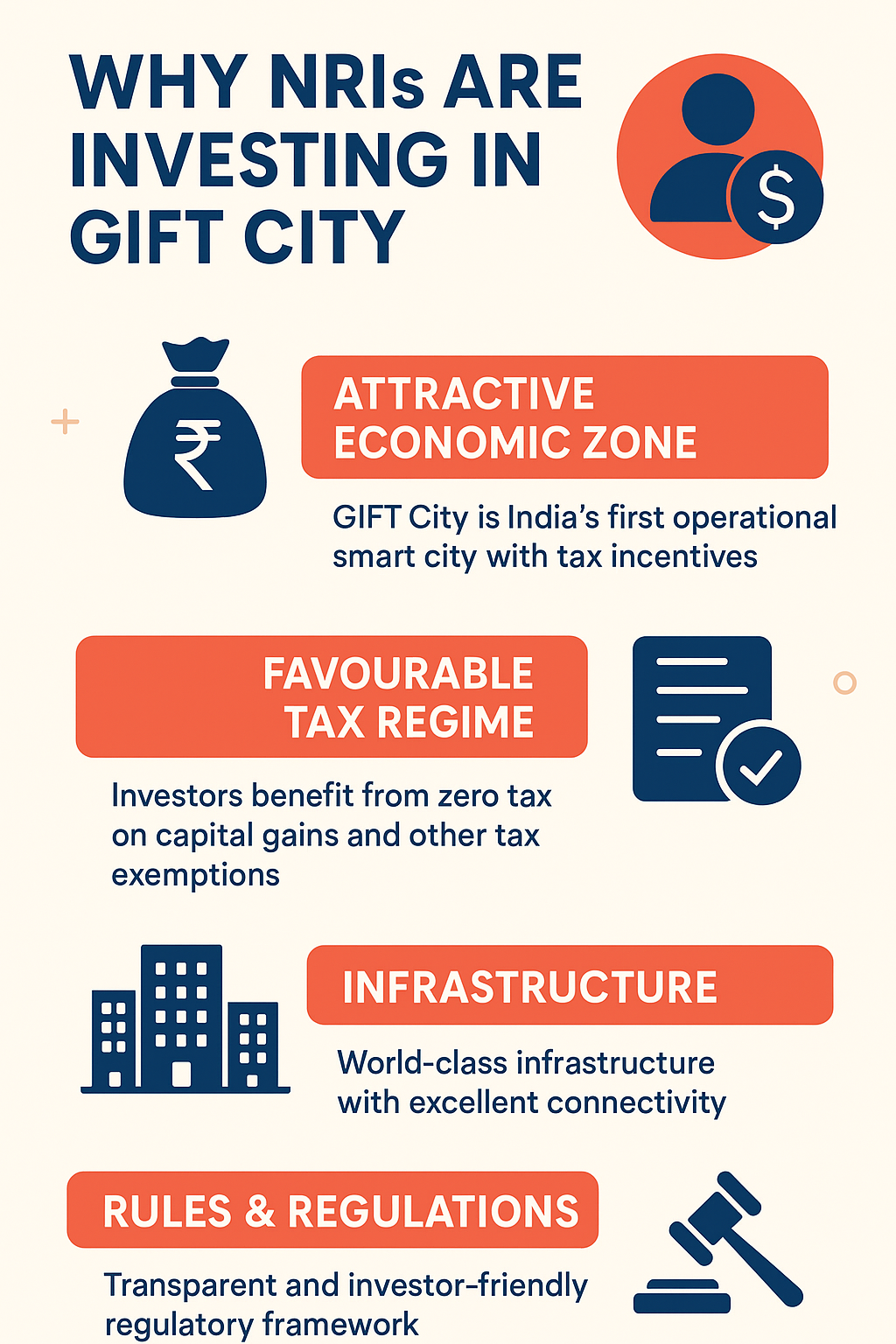
What Works Better Instead: GIFT City–Domiciled Funds
For NRIs who still seek access to sophisticated or alternative strategies, GIFT City–domiciled funds represent a structurally better solution.
Designed specifically for global and non-resident investors, GIFT City funds typically offer:
- Investment and redemption in foreign currency
- Full repatriation by design
- A globally aligned tax and regulatory framework
- Reduced FEMA and RBI friction
- Operational processes suited for overseas investors
Important note:
GIFT City does not eliminate investment risk — but it removes many structural disadvantages NRIs face with domestic Category III AIFs.
Final Takeaway: For NRIs, Structure Beats Strategy
Category III AIFs are not “bad products.”
They are simply misaligned with the realities of NRI investing.
For NRIs, the real risks are not just market-related — they are structural, regulatory, tax-driven, and operational.
Choosing the right structure is not about being conservative.
It’s about being globally intelligent with capital.